Cold Atmospheric Plasma-Aerosol (CAP-A).
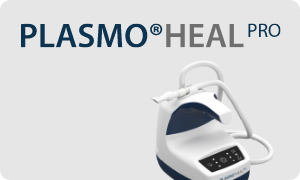
PLASMO®HEAL PRO
MONARCH, Dokumenten- und Publikationsserver der TU Chemnitz. Tischendorf et al. (2026):
The use of Cold Plasma Aerosol (CAP) and Cold Atmospheric Plasma-Aerosol (CAP-A) in the realm of disinfection and dermatology: a scoping review of clinical and preclinical evidence.
DOI: https://doi.org/10.60687/2026-0133
https://monarch.qucosa.de/landing-page/https%3A%2F%2Fmonarch.qucosa.de%2Fapi%2Fqucosa%3A105482%2Fmets%2F/
PLASMO®HEAL PRO
European Wound Management Association (EWMA). E-poster. EWMA-DEWU 2026.
Use of indirect, 3-dimentional, Cold Atmospheric Plasma-Aerosol (CAP-A) in severe Acne.
A Case Report.
Joffe, Preben; Fuchs, Robert.
Download document
PLASMO®HEAL PRO
Frontiers in Microbiology, section Infectious Agents and Disease.
Schaal et al. (2025): Analysis of antimicrobial effects of a contactless, indirect Cold Atmospheric Plasma-Aerosol method for germ reduction on surfaces: An in vitro and in vivo study.
DOI: https://doi.org/10.3389/fmicb.2025.1668987
https://www.frontiersin.org/journals/microbiology/articles/10.3389/fmicb.2025.1668987/full
PLASMO®VET
Frontiers in Veterinary Science, section Veterinary Infectious Diseases.
Kurras et al. (2025): Case Report. Cold Atmospheric Plasma Treatment of Equine Dermatophytosis: A Novel Therapeutic Approach.
DOI: https://doi.org/10.3389/fvets.2025.1651946
https://www.frontiersin.org/journals/veterinary-science/articles/10.3389/fvets.2025.1651946/full
PLASMO®CAR
Nature Scientific Reports
Schaal, Schmelz (2023): Plasma disinfection procedures for surfaces in emergency service vehicles: a field trial at the German Red Cross.
DOI: https://doi.org/10.1038/s41598-023-47759-5
https://www.nature.com/articles/s41598-023-47759-5
Further Application
Nature Scientific Reports
Schaal et al. (2025): New Approaches to Disinfection of Thermolabile Medical Devices Using an Indirect Method: Cold Atmospheric Plasma-Aerosol.
DOI: https://doi.org/10.1038/s41598-025-03364-2
https://www.nature.com/articles/s41598-025-03364-2
Further Application
Nature Scientific Reports
Tischendorf et al (2024): Study on hand disinfection in inpatient geriatric care on the superiority of cold plasma aerosol versus alcohol-based disinfection methods in a parallel group design.
DOI: https://doi.org/10.1038/s41598-024-72524-7
https://www.nature.com/articles/s41598-024-72524-7
Further Application
Hochschule Geisenheim University
Klein (2025): Wirksamkeitsstudie vom Einsatz von Kaltplasma-Aerosol zur Desinfektion von Weinflaschen.
Bachelor thesis. Examiner: L. Pasch M.Sc., Hochschule Geisenheim University.
In the experimental part of this work, the natural bacterial load of both so-called “cottage sterile” new glass wine bottles and cleaned reusable wine bottles was recorded under real storage and operating conditions. The results showed that even brand-new glass had relevant bacterial counts and contaminants such as dust, especially when packaging was damaged or stored for a long time (10 CFU). In the case of reusable bottles, there was a significant difference between professionally cleaned bottles with a short storage period (2 CFU) and manually cleaned bottles with a long storage period (>300 CFU). These initial values underline the need for additional hygiene steps for both new and reusable wine bottles before filling. The work underscores the practicality of Cold Atmospheric Plasma Aerosol (CAP-A) for this application under optimized conditions.
Available on request: robert.fuchs [at] wk-medtec.de
Further Application
Hochschule Geisenheim University
Hack (2025): Anwendung von Kaltplasma-Aerosol zur Desinfektion in der Kellerwirtschaft.
Master thesis. Examiner: Prof. J. Wendland, L. Pasch M.Sc. , Hochschule Geisenheim University.
The aim of the work was a comparative effectiveness test of Cold Atmospheric Plasma-Aerosol (CAP-A) and SO₂ under laboratory and practical conditions with regard to the antimicrobial performance and a possible remanence effect with regard to the preservation of wooden barrels. Four strains of the species Saccharomyces cerevisiae were investigated on a laboratory scale, while in practical testing, new oak barrels were specifically contaminated with Dekkera bruxellensis and then treated. The work provides initial practical findings on the suitability of Cold Atmospheric Plasma-Aerosol (CAP-A) in winemaking. It shows the potential of a chemical-, residue-free alternative to SO₂.
Available on request: robert.fuchs [at] wk-medtec.de